Before the introduction of the vaccine, mumps was a common childhood infectious disease caused by the mumps virus. Clinically, it most often manifests as fever, headache, fatigue, and swelling of the parotid glands, or parotitis. Although mumps is a benign disease, serious complications occur in some patients. Aseptic meningitis develops in around 15% of patients, encephalitis in 0.02–0.03%, and orchitis in 20–30% of affected adult male patients.
Mumps can be prevented by vaccination with live attenuated vaccine strains. The first vaccines were developed in the 1960s, and today around ten vaccine strains of mumps are commercially available. The most commonly used are Jeryl-Lynn, Urabe AM9, Leningrad-3 (L-3), L-Zagreb, and RIT 4385.
Mumps virus is considered monotypic, and all vaccine strains are believed to provide long-term protection against wild-type viruses. Nevertheless, mumps outbreaks occur even in well-vaccinated populations, and in some cases existing neutralizing antibodies do not provide protection against reinfection with a heterologous viral genotype.
Based on nucleocapsid morphology, genome organization, and the biological properties of its proteins, mumps virus belongs to the Paramyxoviridae family. Viruses of this family have been isolated from a large number of species, indicating great genetic diversity. These widespread pathogens are among the most common causes of respiratory tract infections and contribute significantly to morbidity and mortality worldwide. This group of viruses includes respiratory syncytial virus, measles virus, parainfluenza viruses, metapneumovirus, and two emerging viruses, Hendra and Nipah.
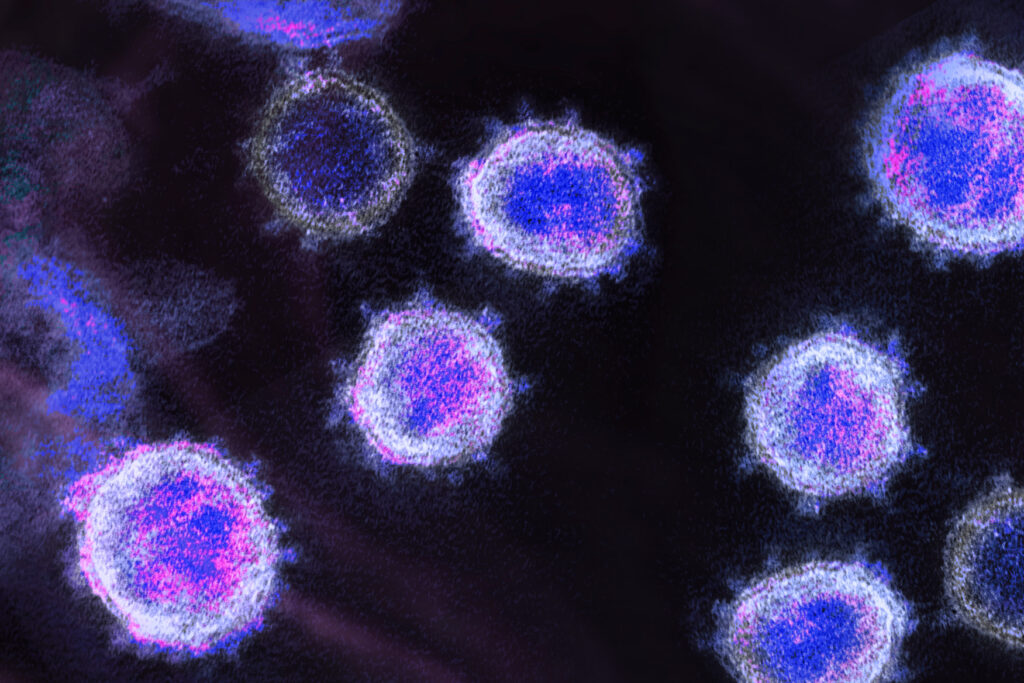
The viral genome consists of single-stranded, non-segmented, negative-sense RNA. The virus is composed of a lipoprotein envelope containing embedded glycoproteins: hemagglutinin-neuraminidase (HN), fusion protein (F), and small hydrophobic protein (SH). On the inner side of the envelope is the matrix protein (M). Inside the envelope is a helical nucleocapsid, consisting of viral RNA bound to nucleoprotein (NP), together with the viral phosphoprotein (P) and the large protein (L). The L protein functions as the viral RNA-dependent RNA polymerase.
A key feature of RNA virus biology is their ‘high capacity for continuous adaptation’ and evolution. Because of the naturally high mutation-introducing capacity of the RNA-dependent RNA polymerase enzyme, as well as the large population of viral particles, RNA viruses show a high level of genetic diversity. Mutations can significantly affect the biological properties of viruses and lead to the emergence of new variants.